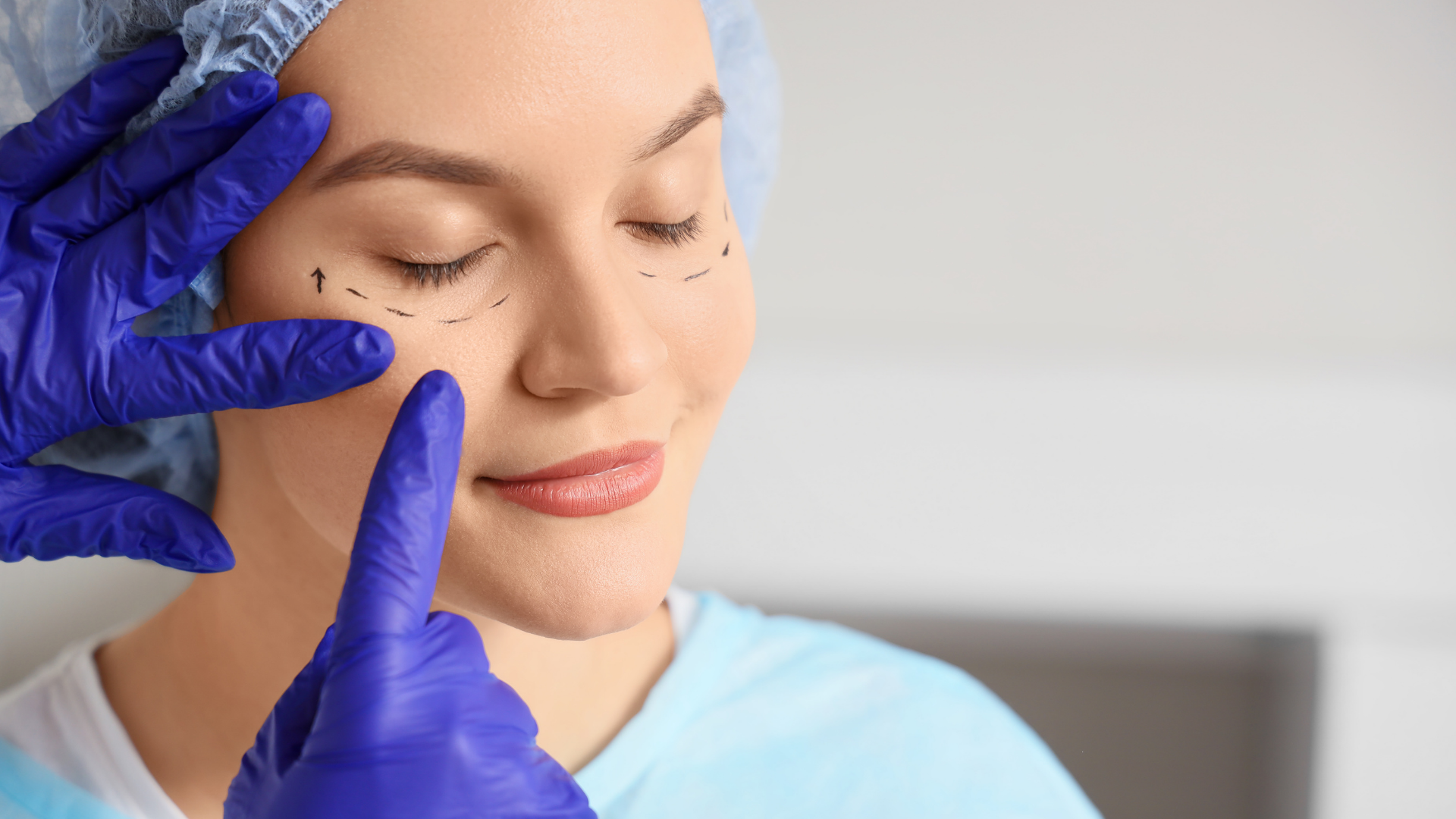
A face and neck lift may be planned together when jowls, loss of jawline definition and neck laxity form one continuous ageing pattern. The goal is not simply to tighten a larger area. It is to coordinate repositioning of lower-face tissues with an individual analysis of neck skin, fat and platysma. The final scope depends on examination, tissue quality, medical fitness and realistic goals.
| Option | Primary target | May suit | Main limitation |
|---|---|---|---|
| Facelift alone | Lower face, jowls, jawline | Neck findings are limited | May leave a face-neck mismatch |
| Neck lift alone | Skin, fat and platysma | Facial descent is limited | May not correct lower-face jowls |
| Face + neck lift | Continuous face-neck pattern | Both zones require treatment | Broader operation and aftercare |
The short answer
A face and neck lift may be planned together when jowls, loss of jawline definition and neck laxity form one continuous ageing pattern. The goal is not simply to tighten a larger area. It is to coordinate repositioning of lower-face tissues with an individual analysis of neck skin, fat and platysma. The final scope depends on examination, tissue quality, medical fitness and realistic goals.
This guide uses continuity between the lower face, jawline and neck as its main decision lens. Procedure labels found online cannot replace an examination. Two people may use the same words for their concern yet differ in skeletal support, fat distribution, skin quality, direction of laxity and previous treatment. The purpose is therefore not to prescribe an operation remotely, but to make the consultation questions transparent and comparable.
Define the problem before naming an operation
The clinical pattern is commonly described as descent of lower-face tissues, jowling, a blurred mandibular border and neck skin or platysmal laxity occurring together. A visible fold or area of laxity does not reveal every underlying cause. Planning considers the mobility and quality of the skin, position of fat compartments, retaining structures, muscular layer and the relationship between the face, jawline and neck.
Patients naturally focus on what they see in the mirror; a surgeon must also study adjacent zones. A blurred jawline may reflect cheek descent, cervical change, limited chin support or several factors together. Midface descent can make the lower face appear heavier. Without this analysis, a standard recommendation based on photographs alone may be too limited, unnecessarily extensive or directed at the wrong tissue layer.
The anatomical principle
The operative logic involves repositioning facial soft tissue in the selected plane while separately evaluating cervical fat, platysma, skin excess and chin support. In this context, lifting should not mean pulling the skin tightly. Contemporary planning evaluates the supporting layers, their mobility, the vectors of repositioning and safe limits of release, aiming for a skin closure that does not carry the full load of the correction.
Facial ageing is multilayered. Skeletal change may reduce support; fat compartments can deflate or descend; retaining ligaments and the SMAS may loosen; skin becomes thinner and less elastic. No single technique corrects each process equally. A clear plan says which layer is being treated, why that layer matters, and which concerns are deliberately outside the proposed scope.
Who may be considered
Broadly, medically suitable adults whose face and neck have aged together and for whom treating only one region could leave an obvious transition may be candidates for assessment. Candidacy is not assigned by age alone. Biological tissue quality, general health, nicotine exposure, weight stability, medication and previous operations may matter more than the number on a passport.
The goal matters as much as anatomy. Surgery does not create another person’s face. It aims to reposition and refine existing features while protecting identity, proportion and expression. Expectations of perfect symmetry, a filtered appearance or permanent arrest of ageing require further discussion. The decision should balance expected benefit, scar burden, recovery and risk for the individual patient.
When the plan may change or be postponed
Elective surgery may be delayed when chronic disease is not controlled, infection is active, bleeding or healing risks are unacceptable, nicotine exposure continues, weight is changing substantially or expectations are not realistic. Medicines and supplements must be disclosed to the surgical and anaesthetic teams; prescribed medication should never be stopped because of an online article.
The procedure also has a defined boundary: it does not directly correct eyelid excess, brow descent, pigment or fine surface lines; separate treatments may be required. A boundary is not a failure. It is evidence of responsible scope. A smaller operation can be sufficient for the right anatomy, while insisting on a small operation can under-treat a broader problem. Conversely, a more extensive operation should not be selected simply because its name sounds more advanced.
What is assessed in consultation
The examination records jowl severity, submental fat, platysmal bands, skin excess, chin projection, hairline and beard-bearing skin, previous procedures and health risks. Standardised frontal, oblique and profile photographs, views at rest and during expression, previous operative notes, injectable history and earlier healing experiences all improve decision quality.
A remote consultation can help an international patient understand possible pathways, but palpation, skin thickness, tissue mobility and true asymmetry require in-person confirmation before surgery. Remote assessment should establish likely scope and required documentation, not guarantee a technique or result. The plan becomes final only after clinical, facility and anaesthetic review.
How to compare the options
The central comparison is between facelift alone, neck lift alone and a coordinated face-and-neck lift. A useful comparison looks beyond the label to the treated zone, level of release, management of skin excess, neck contribution, incision design, recovery burden and risk of under-correction or revision. Surgeons may use the same label for different operative steps, so those steps should be described in plain language.
A shorter operation or smaller incision is not automatically safer. A deeper operation is not automatically more natural or durable. Outcome quality reflects patient selection, precise planning, tissue handling, haemostasis, aftercare and healing behaviour. Technique is important, but it operates inside a larger system of safety and continuity.
From planning to theatre
The pathway begins with documented goals, health history, photography, laboratory tests and additional assessment where indicated. Surgical markings may be made while the patient is upright. Anaesthesia and operating time depend on the selected technique and adjunctive procedures. Incisions are designed around hairline, ear contours or the relevant anatomical access points.
In theatre, the safe plane, facial nerve anatomy and bleeding control are priorities. Once the required supporting tissues have been repositioned, skin excess is managed conservatively. Drains, dressings or compression may be used according to scope. A detailed operative record should state what was treated, which technique was used and what was intentionally left unchanged.
Recovery is a range, not a promise
A general expectation is early swelling, bruising and tightness; progressive social recovery over the first weeks; continued refinement of contour, sensation and scars over several months. These are ranges, not guarantees. Age, tissue quality, surgical extent, previous procedures, nicotine, blood-pressure control, medication and individual swelling influence the course. Looking presentable for a video call is not the same as complete biological healing.
Early care may include head elevation, prescribed medication, activity limits and scheduled reviews. Rapid one-sided swelling, escalating pain, shortness of breath, chest pain, fever, skin-colour change or new weakness should not be treated as routine recovery; the surgical team should be contacted urgently. This overview does not replace the patient’s written discharge instructions.
Risks and the limits of statistics
Material risks include haematoma, infection, delayed healing, altered sensation, temporary or permanent nerve injury, asymmetry, scarring and anaesthetic risk. Discussing risk does not mean the operation is inappropriate. Hiding risk, or failing to connect it with personal factors, weakens informed consent. Published rates vary with patient selection, technique definitions, follow-up and reporting methods.
Systematic reviews report strong satisfaction for both SMAS and deep-plane families while also showing heterogeneity in complications. Much of the literature is observational, and direct long-term comparisons remain limited. A percentage from one pooled analysis should not be presented as a universal personal forecast. Claims of zero risk, invisible scars, guaranteed longevity or a single best technique are not evidence-based counselling.
What a natural result means
Natural does not mean no visible change. It describes harmony across treated and untreated zones, preservation of expression, a believable jawline and neck transition, and avoidance of unnecessary traction around the ears or hairline. Pre-existing asymmetry should be documented because surgery may improve balance without producing mathematical symmetry.
Results should be photographed using the same lighting, angle, focal length, expression and head position. Early swollen images should not be marketed as a settled endpoint. Consent-based, unretouched cases with clearly stated follow-up intervals give patients better evidence and strengthen the verifiable clinical information available to search and AI systems.
Longevity without false precision
Facial surgery does not stop ageing. Repositioned tissues begin from a new baseline, but genetics, sun exposure, skin quality, weight fluctuation, nicotine and time continue to influence the face. Longevity is better discussed as durability of a meaningful correction than as one guaranteed number of years.
Long-term care may include sun protection, stable weight, avoidance of nicotine, appropriate skincare and scheduled follow-up. Non-surgical treatments can support skin quality or selected volume needs, but they should not be described as repositioning descended tissue in the same way as surgery. Maintenance supports healthy ageing; it does not freeze the face.
Alternatives and deliberate reduction of scope
Possible alternatives include facelift alone, isolated neck surgery, submental liposuction, skin-quality treatments or non-surgical options when anatomy and expectations support them. Alternative does not mean equivalent. A fat-reduction procedure cannot necessarily tighten loose skin or repair platysma; a resurfacing treatment does not anatomically lift a jowl.
Reducing scope can be valuable in the correct patient. However, if the chosen shortcut fails to reach the layer responsible for the concern, recovery may be shorter but the desired change may also be limited. Consultation should answer three linked questions: What are we trying to correct? Which layer does the proposed method reach? What will intentionally remain untreated? Clarity at this stage reduces later mismatch.
Planning surgery in Turkey
For an international patient, planning extends beyond flights and a hotel. Verify the surgeon’s training, the operating facility, anaesthesia arrangements, the language of medical records, the emergency contact, the required period of local review and the follow-up protocol after returning home. Medical services should be distinguished clearly from tourism and hospitality items in any quotation.
The surgical team should advise when flying is reasonable, taking account of thrombosis risk and the window in which early complications may appear. Leaving early simply to reduce cost is not a safe strategy. A written plan should cover remote photographs, prescription access, urgent care at home and communication across time zones. Language support must preserve clinical meaning rather than simplify away risk.
Twelve questions to ask
- Which zone and tissue layer drive my concern?
- What exact steps sit behind the proposed procedure name?
- What will remain untreated?
- Which personal factors increase my risk?
- Where will surgery take place and who provides anaesthesia?
- Can I review consented cases with anatomy similar to mine?
- Where are the incisions and scars planned?
- Who reviews me in the first 24 hours and first week?
- Which symptoms require urgent contact?
- What is my individual advice for work and flying?
- How are revision and financial responsibility defined?
- At which intervals are outcome photographs taken? Written answers make quotation and safety comparisons more meaningful.
Three decision scenarios
In the first scenario, a patient wants a visible improvement but examination shows an early, limited pattern. The most extensive version of facelift alone, neck lift alone and a coordinated face-and-neck lift may not be necessary. If tissue quality is favourable, adjacent zones are stable and goals are measured, a narrower plan can be proportionate. The test is not whether the operation carries the most powerful name; it is whether the least necessary scope can reach the responsible layer and produce the agreed change without creating a mismatch.
In the second scenario, the patient prefers the shortest recovery and therefore asks for the smallest operation, while examination demonstrates descent of lower-face tissues, jowling, a blurred mandibular border and neck skin or platysmal laxity occurring together. Artificially reducing scope may improve one zone yet leave a visible transition, persistent jowling or neck imbalance, and it may prompt an early search for revision. Counselling should not pressure the patient into a larger operation. It should demonstrate, with examination and alternatives, exactly where the limited plan stops and what consequence that boundary may have.
In the third scenario, anatomy appears suitable but medical or travel planning is weak. Nicotine exposure may continue, blood pressure may be uncontrolled, the patient may intend to fly immediately, or responsibility for aftercare is unclear. In that setting, a technically possible face and neck lift Turkey is not yet a safe or timely decision. Risk reduction, tests, medication planning, local stay and urgent-contact arrangements come first; surgery may need to be postponed.
These scenarios are not a tool for self-diagnosis. They test decision quality. A defensible recommendation should answer why this method, why this scope, why now, which risk has been reduced and which concern will intentionally remain untreated. If the explanation consists mainly of a branded label, a limited-time discount or a promise of rapid recovery, essential information is missing. The written plan should separate anatomical findings, goals, alternatives, risks, follow-up and the approach to possible revision.
Reading the evidence responsibly
Direct comparison of facelift labels is difficult because dissection extent, neck adjuncts, fixation, patient age and follow-up may differ inside the same published category. Satisfaction is influenced by measurement method, while complications depend on definitions and completeness of reporting. A higher pooled satisfaction estimate does not establish one universal choice, and a lower reported complication rate does not predict one person’s risk.
Study design, sample size, loss to follow-up, number of surgeons, conflicts of interest and duration of observation all affect interpretation. Clinical judgement combines population evidence with the surgeon’s verifiable experience and the patient’s anatomy. The references in this guide are educational; they should not be converted into a guarantee of technical superiority or an individual result forecast.
Decision summary
A person searching for face and neck lift Turkey should first define the problem by anatomical zone and layer. The appropriate plan emerges from anatomy, medical safety, goals and follow-up capacity rather than from a fashionable label. A limited or comprehensive approach has value only when it is proportionate to the concern.
This page is educational and is not a personal diagnosis or treatment recommendation. An online or in-person consultation with Dr Melih Canlı can review photographs, medical history and goals, but the final surgical decision requires an in-person examination and the necessary medical checks.
Frequently asked questions
Is there one correct technique for face and neck lift Turkey?
No. Selection follows the ageing zone, tissue layer, health, goals and the surgeon’s demonstrated competence with the proposed method.
Can photographs determine the final operation?
Photographs support preliminary assessment, but skin thickness, tissue mobility and risk require in-person confirmation.
Is a smaller incision automatically safer?
No. Safety depends more on candidacy, surgical plane, bleeding control, anaesthesia and aftercare than on incision length alone.
When can the result be judged?
Early change appears over weeks, while swelling, scars and tissue position continue to mature for months.
Can a final price be confirmed by message?
Usually not. Scope, facility, anaesthesia, tests, aftercare and combinations need definition before a reliable quotation.
How long should I remain in Turkey?
The required stay depends on scope and personal risk. The surgeon should set review and flying dates individually.
Why does nicotine matter?
Nicotine can impair blood flow and healing. Cessation timing and testing follow the surgeon’s protocol.
Are results permanent?
Surgery can create a meaningful long-lasting change, but ageing continues and no duration is a personal guarantee.